Is Valet Trash Worth It? What San Diego Apartments Spend Without It
What San Diego apartment managers told us about porters, dumpster pads and contamination fines, and how to put a number on it for your own property.
· 7 min read
Ask a property manager what trash costs and you'll usually hear the hauler invoice. Ask the maintenance team and you get a different answer: the first hour of the day spent on the dumpster pad.
Over the past several months I've walked dozens of apartment communities across San Diego County and talked with managers, maintenance supervisors and porters about how trash really works at their property. The same cost came up again and again, and almost nobody had a number for it.
How much porter time goes to the dumpster pad?
More than most budgets account for. When residents carry their own trash down, porters end up picking up bags left next to the dumpster, breaking down boxes, moving trash from full dumpsters to emptier ones and pulling the wrong items out of recycling. Here is what managers told us:
- At a garden-style community in the South Bay, a porter comes three times a week and spends 30 to 45 minutes cleaning the dumpster pads. The manager said they still deal with pests from overfilled dumpsters.
- At a 284-unit community with 13 dumpster areas, porters spend about three hours every morning sorting trash before it becomes a problem.
- At a three-story garden community with 16 dumpster pads, we heard porters are constantly working the pads.
- Another community told us their staff cleans 22 dumpsters every morning.
None of these managers said their porters were doing a bad job. The pad work is simply what happens when hundreds of residents use a few shared dumpsters on their own schedule.
Why doesn't that cost show up anywhere?
Because it isn't on the waste invoice. The hauler bills for containers, pickups and fees. Porter time is paid through payroll or a maintenance contract, so it sits in a different budget line.
I heard the same point in a recent industry webinar on multifamily waste spend. Procurement and waste leaders agreed that onsite labor is rarely counted when properties look at what waste really costs them. That matches what we hear in the field. Managers can tell us who cleans the pads, but rarely what it costs.
The live poll during that webinar showed the same thing. Every attendee who answered said their organization rarely counts onsite labor in waste costs, and most pointed to overage and contamination fees as the hardest part of waste spend to see and predict.
Does your organization account for onsite labor when evaluating waste costs?
- Yes, consistently0%
- Sometimes0%
- Rarely100%
- Not sure0%
Where do you have the biggest opportunity or least visibility into waste spend?
- Service levels0%
- Overage and contamination fees80%
- Waste volume0%
- Bulk spend20%
- Not sure0%
Which part of your waste spend is hardest to predict?
- Rate increases0%
- Overage and contamination fees80%
- Waste volume20%
- Bulk removal0%
- Regulatory costs0%
Calculator
How much porter time goes to your pads?
Enter your own numbers. Nothing is saved or sent anywhere.
Hours per week
13.3
Hours per month
58
Labor cost per month
$1,271
Hours per month use 52 weeks ÷ 12 months. Labor cost leaves out payroll taxes and benefits, so the real number is usually higher. The defaults are an example, not data from any one property.
How contamination fines turn into porter hours
The clearest example came from the 284-unit community above. The manager told us they once received 10 recycling violations in a single month, at $150 each. That's $1,500 in one month.
Their fix was reasonable: they put porters on the dumpster areas every morning. Violations dropped to about one a month. But the sorting now takes about three porter hours a day. The fine got smaller. The cost didn't go away. It moved from the hauler invoice to payroll, where nobody tracks it as a waste cost.
We heard versions of this elsewhere. One community said fines ran about $700 a month after a hauler change. Another said its trash fees were going up because of contamination fines, more frequent pickups and the porter time needed to clean up.
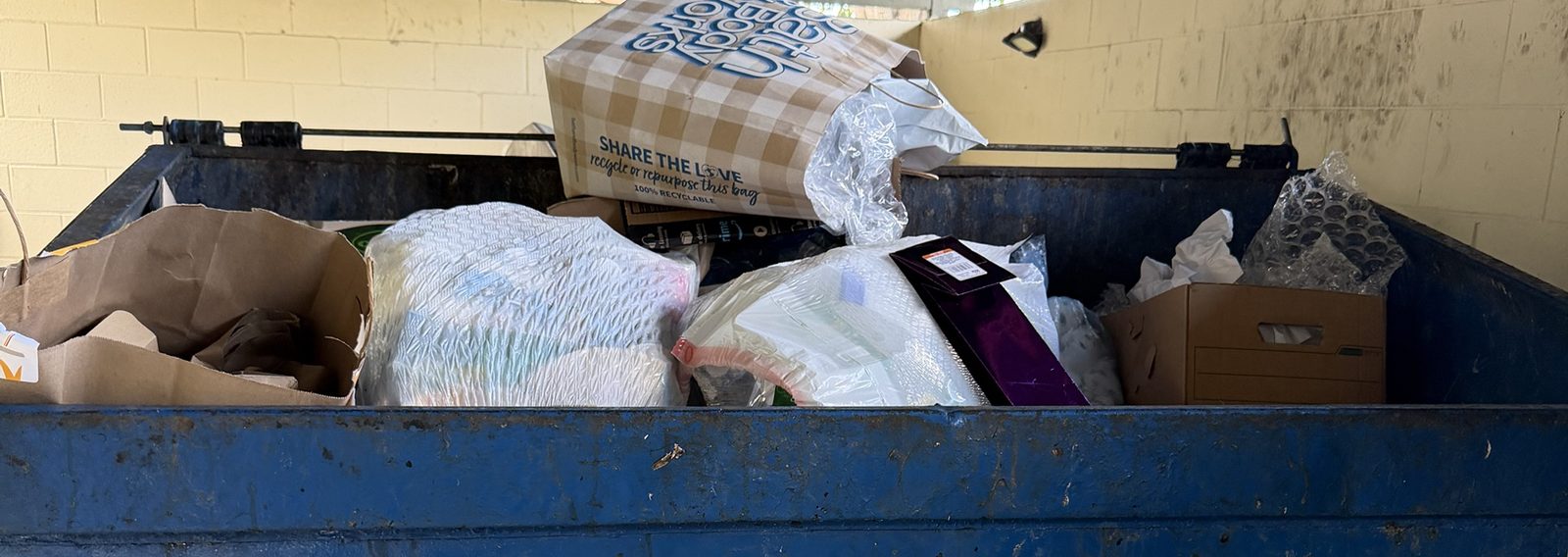
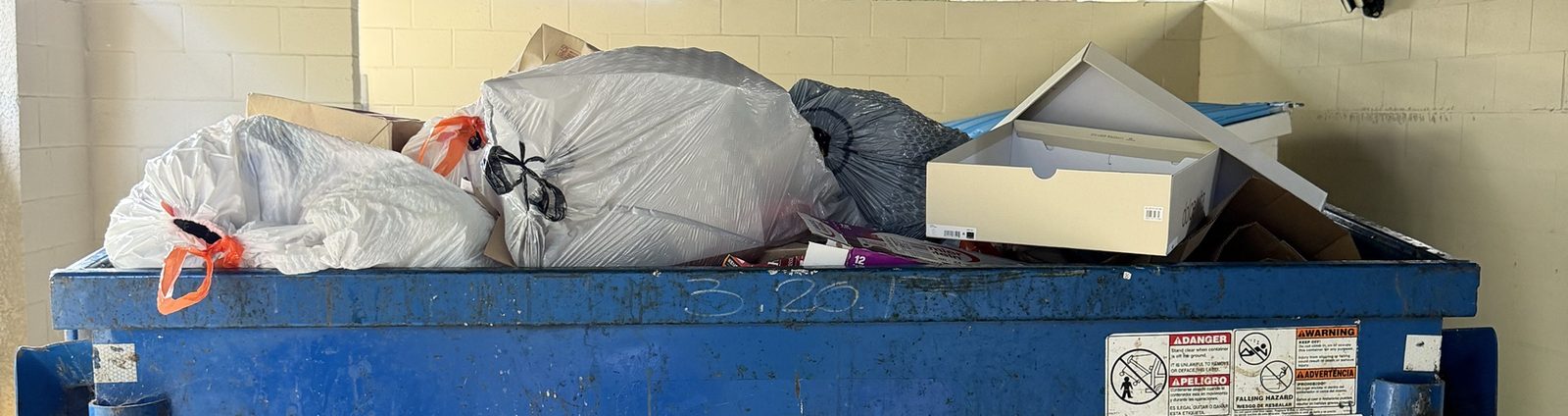
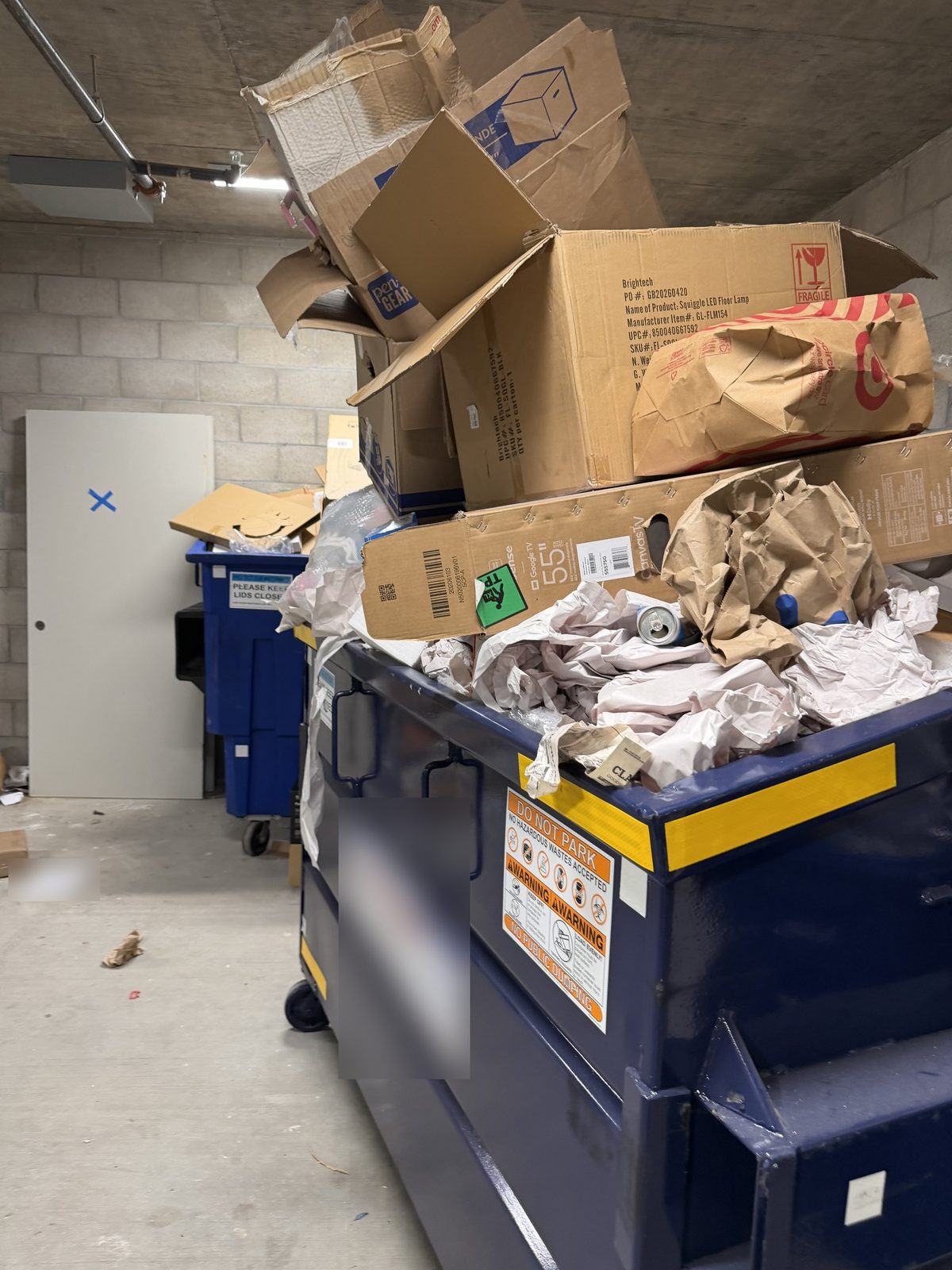
What the pad looks like before pickup
These photos are from two San Diego County communities. They show the two problems we see most: dumpsters filled past the rim, and recyclables that fill space they don't need to.
What San Diego managers try
Every property we visited was already doing something about it. The most common approaches:
- Resident education. Signs, emails and move-in reminders. It helps, but residents change and habits slip.
- Cameras or locks at the pad. Good for finding who left a mattress. They don't sort the recycling.
- More pickups or bigger containers. Fixes overflow, but often one dumpster is full while the next one is half empty.
- More porter time. It works, and it's the most common answer. It's also the cost that never shows up on the waste invoice.
- Nightly doorstep pickup. Trash is collected at each door and taken to the dumpsters by our crew, so the pad is handled before the morning starts.
What changes with valet trash
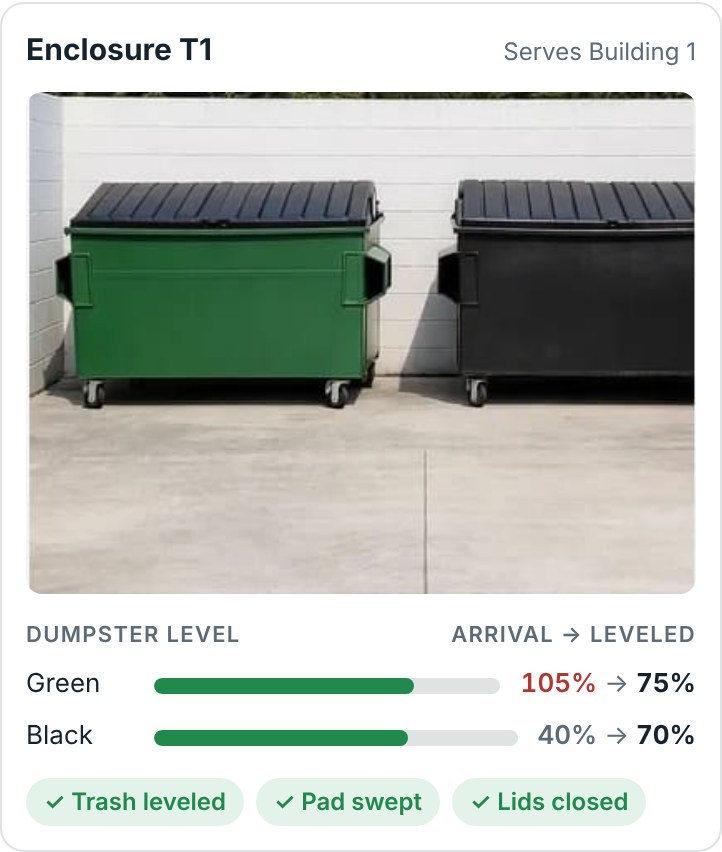
Valet trash doesn't replace your porters. It changes what they spend the morning on. With our service, our staff picks up at each door five nights a week, Sunday through Thursday. Bags go into the dumpster, not next to it. On each visit we tidy the pad and level the dumpsters so trash is spread across them. Recycling is picked up twice a week, and every visit is logged with photos so the office can see what was done.
The aim is a pad that's already handled when maintenance arrives. That usually means fewer overflow problems, fewer surprises on the waste invoice and porters who can go straight to make-readies, common areas and resident requests.
What if residents don't want to pay?
It's the most common pushback we hear, and it's fair. But at most communities we've visited, residents are already paying for trash. They just don't see what's in the number.
Contamination fines, extra pickups, porter time on the pad and chute cleaning all have to be paid for somewhere. At many properties, those costs show up in a monthly trash fee that changes as they change. One property told us they were dropping valet trash. In the same breath, they said they would need to start charging a chute maintenance fee because they frequently break and jam with overuse.
So the real question usually isn't whether residents pay for trash. It's what they get for it: a porter fee that rises with fines and cleanup, or a service that handles an annoying chore for them, nightly.
How a property funds its waste program, and whether it passes any cost to residents, is the owner's decision. Check with your own counsel on resident fees.
When valet trash isn't the right fit
Not every property needs it. Managers at smaller communities with plenty of easy-to-reach dumpsters often told us they have no real trash problem, and they're right. Valet trash makes the most sense at multi-story garden communities without elevators or chutes, where residents carry trash down stairs and across the property every day. It matters even more at 55+ and independent-living communities, and at properties with lots of families. Seniors can struggle with heavy bags on the stairs, and when teenagers take out the trash, the bag doesn't always make it into the dumpster.
Frequently asked questions
How much time do porters spend on apartment dumpster pads?
It depends on the number of dumpster areas and how residents use them. Among San Diego communities we have talked with, we heard anywhere from 30 to 45 minutes three times a week at one property to about three hours every morning at a community with 13 dumpster areas.
Does valet trash replace porters?
No. Porters still have plenty to do. Valet trash takes the nightly dumpster pad work off their list, so their time goes back to make-readies, common areas and resident requests.
What causes contamination fines at apartment communities?
Usually the wrong material in a recycling container, such as bagged trash or food waste, or containers that overflow before pickup. Whether the fine comes from the hauler or the city depends on the area and the contract.
Who pays for valet trash?
The property pays the valet company and decides whether to fund it or pass some or all of the cost to residents. That is the owner's decision, and owners should check with their own counsel on resident fees.
Free 10-minute pad walk
A cleaner community, without more porter hours
Give me 10 minutes to walk your dumpster pads. I'll show you how nightly valet trash keeps the pads clean before your team arrives, so porter time goes to the rest of the property.